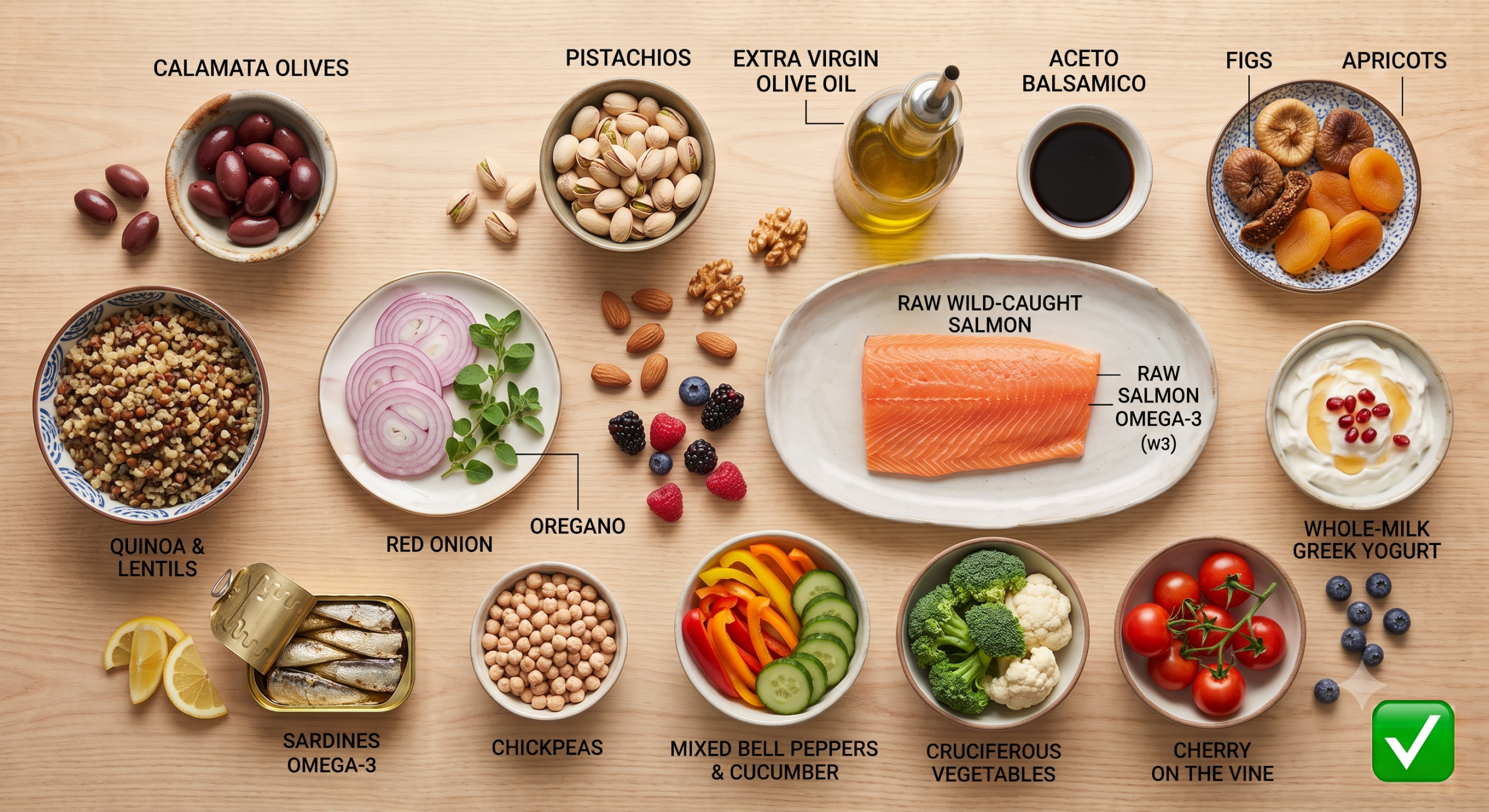
If you were recently diagnosed with Rheumatoid Arthritis, you have already noticed that your food will impact your feelings. If you are interested in the best food for Rheumatoid Arthritis, this article is for you.
If you run an online Google search, no wonder you will become confused, as everyone seems to be an expert these days…You will find recommendations from paleo to carnivore, intermittent fasting, Mediterranean, or what is newly advertised as an “anti-inflammatory diet”. Just reading about all of these, you may wonder, what is left for you to eat?
This article makes it easy for you by describing the ten best foods you can eat, along with scientific evidence supporting their use in patients with Rheumatoid Arthritis.
Thus, instead of adopting a “diet,” you will approach food as part of a nutritional plan.
Just as important as what to eat is knowing what to limit — see our guide to the 10 Foods to Avoid with Rheumatoid Arthritis.
1. Berries and Enzymatic Fruits
- Blueberries
- Strawberries
- Blackberries
- Raspberries
- Papaya
- Mango
- Pineapple
Berries are a fantastic choice! They contain antioxidants like flavonoids, quercetin, vitamin C, and fiber that will support your immune system and decrease inflammation. In 2017, 300 patients with rheumatoid arthritis were surveyed about 20 commonly eaten foods. The study showed that ¼ of patients with Rheumatoid Arthritis reported being affected by the food they eat. Those who eat blueberries and strawberries had less pain than those who eat more deserts and drink sugary drinks.
2. Vegetables
Vegetables, especially the green, leafy ones, like
- Broccoli
- Spinach
- Swiss chard
- Kale
- Brussels sprouts
- Asparagus
Leafy greens are the base of the vegetarian and Mediterranean diet, with great benefits for Rheumatoid Arthritis patients. Vegetables are rich in antioxidants, vitamins ( e.g., vitamins A, K, C, and E), and many fibers. The darker the green color, the more powerful they are.
Let’s talk about spinach! In the same survey from 2017, spinach was also shown to greatly impact how people with Rheumatoid Arthritis felt, as those who ate more spinach felt much better.
3. Legumes
- Beans (different species)
- Peas
- Edamame
- Garbanzo beans
- Lentils
- Soy nuts and
- Peanuts
Legumes are the staple food in the Mediterranean diet. Legumes are rich in proteins, fibers, vitamins (B complex vitamins B1, B2, and B6), and minerals ( e.g., iron, calcium, potassium, phosphorus, and zinc). Because of the high protein and fiber content, consuming legumes will avoid insulin spikes and hunger as they keep your gut busy, thus lowering the risk of obesity and diabetes.
That is a plus, correct?
Fibers from legumes will keep your gut microbiota happy, and those bacteria will produce an anti-inflammatory compound called short-chain fatty acids, thus decreasing pain and inflammation.
Do you eat enough legumes/ day?
One study showed that people in Mediterranean countries consume between 8 and 23 grams (g) of legumes daily. In contrast, Americans consumed less than 5 g a day.
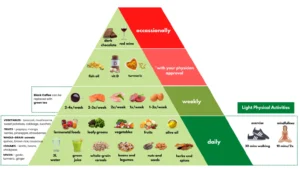
In one of my other articles, I shared a food and lifestyle pyramid for people with Rheumatoid Arthritis. The pyramid outlines the amounts and types of food needed to prevent or reduce the risk of developing rheumatoid arthritis and to reduce the inflammation and pain associated with this disease. It was adapted to include scientifically proven foods with anti-inflammatory properties and exclude foods that can potentially cause more inflammation. In addition, recommendations about supplements, exercise, and mindfulness were added. My patients find it very easy to use and beneficial.
4. Fish
- Sardines
- Salmon
- Mackerel
- Trout
- Code
- Herring
All of these fish types have a high content of Omega-3 Fatty Acids, in comparison with shellfish, which have a small content of Omega-3 Fatty Acids. Consuming food with a high content of omega-3 Fatty Acids was shown to decrease inflammation, pain, and swelling, and decrease the need to use more anti-inflammatory medications (e.g., NSAIDs like ibuprofen or naproxen)
If you do not enjoy eating fish or do not have access, a supplement with fish oil / omega-3 Fatty Acids might be an option.
5. Nuts
- Walnuts
- Cashew
- Pecans
- Pistachios
- Almonds
- Hazelnuts
Nuts are a fantastic source of fiber, vitamin E, and micronutrients such as selenium, magnesium, and copper. The PREDIMED trial published in 2013 showed that eating a Mediterranean diet supplemented with a mix of NUTS (about 30 g/day of nuts (walnuts, almonds, and hazelnuts) reduced the risk for heart disease by 30% in about five years of intervention.
Nuts can decrease your cholesterol and triglyceride levels, as they contain monounsaturated fats that have great health benefits.
My recommendation, if you are not allergic to nuts, start eating one handful daily!
6. Chia and Flax Seeds
Yes, chia and flax seeds are an excellent source of Omega-3 fatty acids, but their biggest benefit is the high fiber content (about 10 grams per serving for chia seeds), which will control hunger and help maintain a normal weight.
Additional benefits, getting more fiber into your diet, will keep the gut microbes happy, and they will produce more short-chain fatty acids, which will decrease inflammation in the body.
7. Olive Oil
Yes, the ancient OLIVE oil is MORE than a COOKING oil! You most likely heard about the benefits of using olive oil on your heart or decreasing the risk of heart attacks and cholesterol. But have you heard about the benefits of olive oil in arthritis?
Olive oil contains oleic acid and oleocanthal, both with natural anti-inflammatory properties. Olive oil is one of the base constituents of the Mediterranean diet. Numerous studies on the Mediterranean Diet supplemented with olive oil demonstrate the benefits of consuming more olive oil.
8. Whole Grains
- Quinoa
- Wild rice
- Brown rice
- Gluten-free Oats
- Buckwheat
- Corn
- Rye
Whole grains have high fiber content, which helps control hunger for a longer period of time, as well as lower cholesterol and prevent constipation. Eating whole grains will decrease the inflammation and the signs and symptoms of Rheumatoid Arthritis.
Nowadays, many breads, cereals, crackers, desserts, and pastries are made with refined grains. Ideally, replace all of these with WHOLE GRAIN products.
9. Fermented foods
Fermented dairy like
- Plain Yogurt (unsweetened)
- Kefir
- Cultured sour cream (!!! Be aware that not all sour cream contains living microbes)
Other fermented foods
- sauerkraut (fermented cabbage)
- pickles (fermented cucumbers or other vegetables)
- kombucha ( a popular fermented, sweetened tea)
Fermented foods are a natural source of probiotics that help your gut to decrease inflammation. People around the globe have figured out how to ferment just about everything, including beans, fruits, vegetables, grains, and even meat and fish.
10. SPICES
These are more than just spices that will enhance the flavor of your food. People worldwide have used these spices for centuries for their antimicrobial, antioxidant, and anti-inflammatory properties. In Rheumatoid Arthritis, many studies demonstrate the benefits of all of these in reducing inflammation, inflammatory markers, and pain. My recommendation: instead of adding more SALT, which increases inflammation, use more spices to enhance the flavor of your food.
Want a deeper, step-by-step framework for using diet and lifestyle to manage RA? Dr. Girnita’s book, Thriving with Rheumatoid Arthritis: Your Science-Backed Guide to Conquering RA, covers this in much more depth.
Leafy greens, fatty fish (salmon, sardines, mackerel), legumes, nuts, olive oil, whole grains, berries, and spices like turmeric and ginger are consistently linked to lower inflammation markers in people with rheumatoid arthritis. Foods rich in omega-3s, antioxidants, and fiber — such as fatty fish, leafy greens, berries, and legumes — are among the most evidence-backed choices for reducing arthritis-related inflammation. Fatty fish, leafy greens, berries, nuts, and olive oil are frequently highlighted as top choices, since each has research supporting its anti-inflammatory effect. Diet can meaningfully reduce inflammation and improve comfort, but works best as part of a full treatment plan alongside medication and guidance from a rheumatologist.Frequent asked questions
What is the best anti-inflammatory food list for arthritis?
What foods are good for arthritis?
What are the 5 best foods for rheumatoid arthritis?
Can diet alone improve rheumatoid arthritis symptoms?
Conclusion
When it comes to managing the symptoms of Rheumatoid Arthritis, what you eat is very important in addition to stress management, exercise, and medication. Having a physician who will help you make a nutrition plan is important. Here at Rheumatologist OnCall, we take pride in our specialized, integrative approach tailored for people living with Rheumatoid Arthritis.
Our focus goes beyond just treatment; we prioritize education on crucial aspects such as nutrition. We offer online courses and personalized physical therapy sessions to meet individual needs.
We treat the whole body and the mind. We treat the patients, not only their disease!