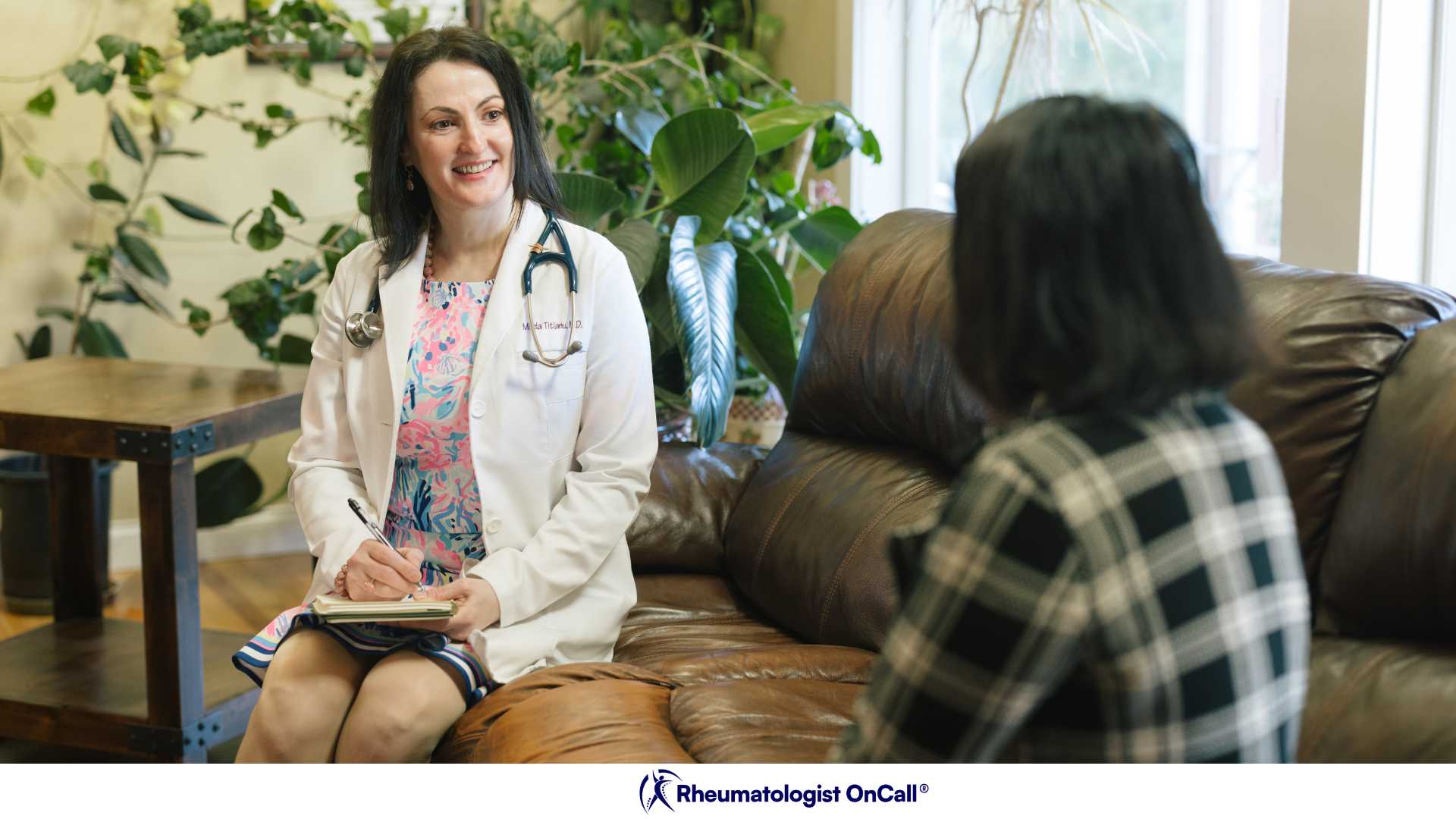
Every week in our rheumatology clinic, I talk with women who are worried about their new symptoms, like joint and muscle pain, especially as they go through menopause. Maybe this sounds familiar: you went years with just some aches and pains, but as soon as menopause hit, things got so much worse. Or maybe you’ve just been diagnosed with an autoimmune disease like rheumatoid arthritis (RA) and want to know, “Is this connected to menopause, my hormones, or is it just bad luck?”
As a doctor specializing in autoimmune disease, most of my patients are women, and most of them have the same questions. The science on menopause, estrogen, RA, and hormone therapy has come a long way in recent years, and as physicians, we can no longer bury our heads in the sand, pretending menopause doesn’t have to do with autoimmune diseases.
Today, November 10th, 2025, the FDA finally announced the removal of the “black box” warning on multiple forms of HRT, including topical estrogen. But will that open the window to new opportunities for our patients with arthritis and autoimmune diseases?
What Is Menopause, and Does It Matter for Autoimmune Disease?
Menopause is when a woman permanently stops having periods for 12 months, usually between the ages of 45 and 55. The main player here is estrogen—a hormone your body makes less and less of as menopause approaches. But estrogen isn’t just about periods and pregnancy. It also keeps cartilage intact, bones stronger, and even your immune system in check.
As a rheumatologist, I see autoimmune diseases like RA three to four times more often in women than in men, and many patients develop the disease after menopause. Why is this happening? A big reason is the hormone changes—especially when estrogen drops due to menopause.
Is Menopause Linked to More Autoimmune Diseases?
Unfortunately, more and more research supports the idea that during menopause, the risk of developing autoimmune diseases like rheumatoid arthritis (especially the seronegative type), Sjögren’s syndrome, and psoriatic arthritis increases. This increased risk is mainly due to having less estrogen—either because menopause starts earlier, your periods stop sooner, or your body has fewer reproductive years overall.
When estrogen drops after menopause, the immune system often becomes less controlled and more inflamed, which can lead to these diseases getting started or worsening. On the other hand, having more years with estrogen (like late menopause, over 45-50 years or a long reproductive lifespan) seems to protect against these illnesses.
For rheumatoid arthritis, being postmenopausal or having menopause starts early makes it much more likely you’ll get seronegative RA (where the regular Rheumatoid factor and anti-CCP antibodies are not found in the blood tests), while seropositive RA is less influenced by menopause timing.
A recent review in BMC Rheumatology, published in 2024–2025, combined data from 11 large studies worldwide, found that
- Women who experience menopause before age 45 have nearly 3x the risk of developing RA compared to those who go through menopause at a “normal” age.
- After menopause, women’s overall risk of RA is about 35% higher than before.
- The risk is highest for “seronegative” RA (the kind where blood tests are negative for certain antibodies).
With Sjögren’s syndrome, most women develop the disease around the time of menopause, and women who have had less cumulative estrogen exposure are at the highest risk.
Psoriatic arthritis risk also goes up if menopause happens early, but late menopause with more years of estrogen lowers the risk.
In lupus (systemic lupus erythematosus), menopause can mean earlier disease and a greater chance for complications like heart disease and osteoporosis—though some will see lupus activity quiet down after menopause, the overall risk stays higher.
Does Menopause Make Autoimmune Disease Worse?
Many of my patients notice their joint pain, swelling, and fatigue get more intense after menopause hits. When women go through menopause, it often makes some autoimmune diseases worse, especially rheumatoid arthritis and Sjögren’s disease, but patients with lupus tend to be less affected. Patients with RA might experience more flare-ups, while patients with Sjögren’s disease might experience a severe increase in their dryness of the eyes, mouth, and especially vaginal dryness.
On the flip side, patients with lupus might be less impacted. While some women will have milder lupus symptoms after menopause, there’s still a higher chance of problems like heart disease and weakened bones later on.
For those with psoriatic arthritis, having menopause earlier or for a shorter time also makes the disease more likely, but doctors still don’t have a clear picture of how menopause affects symptoms if you already have it.
Can Longer Lifetime Estrogen Exposure Protect Against Rheumatoid arthritis?
A 2025 Canadian study followed thousands of women for 10+ years to see who developed RA. Here’s what they found:
- Women who went through menopause after age 50, or who had used hormone replacement therapy (HRT) for eight years or more, had about an 80% lower risk of getting RA than women who went through menopause before age 44 and never used HRT.
The answer is that the longer your body has estrogen —from your first period to menopause —the better protected you are, and the more years of estrogen are GOOD for your joints.
Can Hormone Replacement Therapy (HRT) increase the risk of Autoimmune disease?
There is still significant controversy and uncertainty regarding this topic. Some studies suggest that using systemic hormone replacement therapy (HRT) hormones have promoted, especially combined estrogen-progestin and systemic estrogen-only regimens, for a long time at higher doses, is associated with a modestly increased risk of developing certain autoimmune diseases, like rheumatoid arthritis, Sjögren’s syndrome, lupus (SLE), and psoriatic arthritis.
Immunological studies indicate that HRT can alter cytokine profiles and immune cell populations, but direct evidence for topical HRT causing autoimmune disease is lacking, and further research is needed.
One of the largest studies looked at nearly 1.8 million women and found that those who used systemic HRT had a 27-29% higher chance of developing an autoimmune disease. However, the actual increase in absolute risk remains small and varies by condition. Importantly, this study was retrospective and observational, so it does not prove that HRT causes autoimmune diseases; it only shows an association that needs further research. The authors concluded that “ Hormone therapy remains a safe and important option for many women when used appropriately but, like any treatment, it should be individualized while we await more research on its possible links to autoimmune disease.”
But there are also studies that do not support these findings, like the Canadian Study on rheumatoid arthritis that showed that women who start systemic HRT late (after age 50) and use it for 8 or more years may have a lower risk of developing RA, and estrogen may reduce harmful inflammation.
Many clinicians worry that estrogen might “stimulate the immune system” and worsen autoimmune activity — but this is not supported by current menopause society guidelines (NAMS, BMS, ACOG).
The real issue is individual risk stratification, especially regarding thrombosis, inflammation, and organ involvement—not the autoimmune diagnosis itself.
In contrast, topical HRT like low-dose topical vaginal estrogen is associated with minimal systemic absorption and has not been shown to increase the risk of cardiovascular disease, cancer, or autoimmune disease in large cohort studies.
Licensed doses of topical vaginal estrogen do not elevate estradiol above the normal postmenopausal range.
Current research does not support an increased risk of developing autoimmune diseases with topical vaginal estrogen alone, but data specifically addressing autoimmune disease risk are limited, and further research is needed.
Can HRT make autoimmune worse?
HRT does not appear to make established RA worse. In Sjögren’s disease, once established, HRT does not appear to affect its severity.
What does all this mean for you?
The key takeaway is that not all HRT is the same. It really matters:
- Which autoimmune disease do you have (RA, lupus, Sjögren’s, PsA…)
- What type of HRT do you use (systemic vs. topical; estrogen only vs. combined estrogen/progestin; oral, patch, or local)
- How long and at what dose do you use it
Systemic, oral, and patch therapies have different risks compared with topical vaginal estrogen.
The type, dose, duration, and timing of HRT all affect the risk for autoimmune diseases.
Because of this complexity, it is essential to consult with a menopause-certified specialist who understands autoimmune diseases. Together, you can weigh the risks and benefits and pick the safest, most effective treatment tailored to your situation.
Why Our Clinic Cares: A Personalized Program for You
Every day, we see how menopause and autoimmune disease can collide to make life more complicated—especially for women trying to manage joint pain, fatigue, or hormonal symptoms all at once.
There’s no “one-size-fits-all” solution when it comes to hormone therapy or autoimmune care, and getting it right requires expert, individualized support.
That’s exactly why we’ve created the new Women’s Hormone and Autoimmune Balance Program.

It’s led by Dr. Mirela Titianu, a certified menopause specialist who’s board-certified in internal medicine, obesity medicine, and lifestyle medicine.
Dr. Titianu knows the unique struggles women face with autoimmune diseases—and she’s passionate about helping you find what’s safest and most effective for your body.
Working with a menopause-certified clinician who truly understands autoimmune disease means you’ll have every option on the table—whether that’s hormone therapy, lifestyle changes, or non-hormonal strategies—always based on your health history, risks, and goals. Sometimes HRT can be a game-changer for quality of life, but sometimes it’s not the safest choice. We’ll help you sort through the noise, avoid a “cookie-cutter” approach, and support you in building a healthier, happier life.
Ready to take charge of menopause, autoimmune issues, and your future? Connect with us today to see how the right care—and the right partnership—can make all the difference.
References
- https://pmc.ncbi.nlm.nih.gov/articles/PMC11928423/
- https://pubmed.ncbi.nlm.nih.gov/39350181/
- https://pubmed.ncbi.nlm.nih.gov/39951288/
- https://pubmed.ncbi.nlm.nih.gov/28085997/
- https://pubmed.ncbi.nlm.nih.gov/31233285/
- https://pubmed.ncbi.nlm.nih.gov/16981295/
- https://pubmed.ncbi.nlm.nih.gov/40344934/
- https://pubmed.ncbi.nlm.nih.gov/27086591
- https://menopause.org/press-releases/understanding-the-association-between-hormone-therapy-and-autoimmune-disease-risk
- https://pubmed.ncbi.nlm.nih.gov/28650869/
- https://pubmed.ncbi.nlm.nih.gov/35701626/
- https://rheumatologistoncall.com/womens-hormone-autoimmune-balance-program/
Latest Update November 10, 2025
Author: Drs. Diana Girnita and Mirela Titianu
Author

Frequent asked questions
Does menopause cause RA, or just make it worse?
Menopause doesn’t “cause” RA—but it makes your immune system more likely to attack your joints if you’re already at risk. Many women first notice RA symptoms right after menopause.
Is early menopause always bad?
If periods stop before age 45, your risk for RA and other autoimmune diseases rises. Longer years with estrogen are protective.
Is HRT safe if I have, or am at risk for, RA?
Most recent studies say HRT is usually safe and can be protective, especially for women who lost estrogen young. But it’s not for everyone. If you have certain cancers, blood clot risks, or are over age 60, you need a careful plan.
I have RA, and my joints have gotten worse since menopause. What can help?
Talk to your rheumatologist about a comprehensive plan. This may include adjusting medications, bone meds, physical therapy, supplements, and, in some cases, HRT. Protecting bone health is critical—RA, menopause, and steroids all raise fracture risk.
How can I lower my risk for RA after menopause?
Exercise, healthy weight, no smoking, Mediterranean-style diet, treating sleep or stress problems, and—if appropriate—discussing HRT with a specialist. Early diagnosis and treatment also slow down or even stop joint damage.
What’s the best time to talk to my doctor?
If you’re approaching menopause and have joint pain, a family history of autoimmune disease, or went through menopause early, see a rheumatologist and menopause specialist NOW. Prevention and early action really help.
Can hormone therapy make RA worse?
In most studies, modern low-dose HRT does not make RA worse—and may help. But get your plan from a menopause and autoimmune expert.
Does menopause make all autoimmune diseases worse?
Many get worse (like RA), but some—like lupus—can calm down. It’s always best to check with a specialist.
I’m scared of bone loss—is it really that serious?
Yes! Menopause and RA both cause bone loss. Taking calcium, vitamin D, being active, and sometimes using bone-protecting medicine is key.
If I’m already past menopause, is it too late?
It’s never too late to protect your joints and bones or stop disease from getting worse. Early action is best, but all women can benefit from informed care.