If you’ve been searching for a rheumatologist near me, you’re not alone. Over 60 million Americans suffer from arthritis, and the number is only growing. Additionally, autoimmune diseases—such as rheumatoid arthritis (RA), lupus, psoriatic arthritis (PsA), and Sjögren’sdisease—are becoming more common, affecting more than 20 million people in the U.S. alone.
Despite this increasing demand for specialized care, there’s a significant shortage of rheumatologists in the United States. Currently, there are only about 3,500 board-certified rheumatologists practicing in the country. This means:
- Long wait times – Patients often wait 3 to 6 months to see a specialist.
- Limited access in rural areas – Many rheumatologists are located in large cities, making it difficult for people in smaller towns or rural areas to find care.
- Many rheumatologists work part-time – A significant portion of rheumatologists work reduced hours or are nearing retirement, further shrinking the availability of care.
- Restricted insurance acceptance – Some rheumatologists do not accept specific insurance plans or Medicare, leaving patients without options.
If you’re struggling to find a good local rheumatologist, it’s not your fault. The system is overloaded, and many patients with autoimmune diseases are left without access to timely care. But there’s hope—as we become more comfortable with shopping or banking online, why not consider an online consultation with a specialist? Over the last five years, more people have become aware of telemedicine. In rheumatology, telemedicine (also known as telehealth) has been proven to be a viable solution for patients with arthritis and autoimmune diseases, bridging the gap and offering faster, more accessible options for those in need.
The Growing Demand for Rheumatologists & Why It’s Hard to Find One
1. The Numbers Are Against Patients
The demand for rheumatologists is increasing, but the number of specialists is not keeping up. Here’s a closer look:
- In 2015, there were 2,500 practicing rheumatologists, and by 2030, it’s projected that the demand will exceed the available specialists by at least 4,000.
- By 2040, the CDC estimates 78 million Americans will have some form of arthritis, further increasing demand.
- The American College of Rheumatology (ACR) reports that 50% of rheumatologists are expected to retire in the next decade, worsening the shortage.
2. Where You Live Matters
- Many rheumatologists practice in urban areas, leaving people in rural states with little to no access.
- If you live in Montana, Wyoming, the Dakotas, or rural parts of the Midwest and South, you may have no nearby rheumatologist at all.
- Some states have only a handful of specialists, meaning patients must travel hours just to be seen.
3. Insurance Barriers & Cost Issues
- Many rheumatologists only accept certain insurance plans. If your insurance is out-of-network, you may be forced to pay thousands of dollars out-of-pocket.
- Even with insurance, patients are often burdened with high copays, limited coverage for specialized treatments, and denied claims for biologic medications.
- Patients without insurance often have limited options for being seen in a traditional practice that only works with insurance companies.
What to Look for When Choosing the Best Rheumatologist Near You?
Given these challenges, selecting the right rheumatologist, whether for in-person or online consultations, is essential. Here’s what you should consider:
1. Board Certification & Experience
Make sure your doctor is board-certified in rheumatology and has extensive experience treating your condition, whether it is rheumatoid arthritis, lupus, psoriatic arthritis, or fibromyalgia. Rheumatologists undergo extensive training, spanning four years of medical school, three years of residency, and an additional two years in fellowship. Learning how to manage complex autoimmune conditions requires years of practice. Ensure you consult a physician first, rather than a mid-level provider.
2. Availability & Wait Times
Ask how long it takes to get an appointment. Some local clinics have a wait of 3-6 months, while telemedicine rheumatologists often offer same-week or next-day appointments.
3. Comprehensive Care Approach
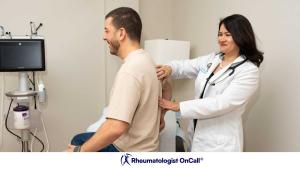
A good rheumatologist should do more than prescribe medication. Look for one who discusses lifestyle changes (such as diet, exercise, and sleep), holistic and integrative medicine, and addresses gut health.
4. Telemedicine Options
Given the shortage of specialists, consider a telehealth rheumatologist, especially if you live far from a major city or face long wait times.
5. Insurance & Payment Options
Confirm whether they accept your insurance or offer cash-pay options. Ask about the price of the consultation, laboratory and imaging tests, and medications.
Why Consider a Telehealth Rheumatologist?
With the shortage of in-person rheumatologists, telemedicine for rheumatology or online consultations is an excellent alternative that provides faster, more personalized care from the comfort of your home.
Who Can Benefit from Online Rheumatology?
- Patients with rheumatoid arthritis, lupus, gout, psoriatic arthritis, Sjögren’s, and fibromyalgia.
- Those in rural areas or states with limited specialists.
- Patients who require regular follow-ups but do not want to travel long distances.
Get Expert Rheumatology Care Online with Rheumatologist OnCall
If you’re struggling to find a local rheumatologist or facing long wait times, you don’t have to suffer for many months. When Rheumatologist OnCall was launched at the beginning of 2020, the mission was to bridge the gap between the need to see a specialist when it’s most urgent, not months later. We began by serving three US states and have since expanded to cover 10 states. Not only do we offer quick access to a top rheumatologist, but we have also implemented a personalized approach that bridges traditional medicine with an integrative, holistic approach that includes nutrition, exercise, and a whole mind-body approach. Here at Rheumatologist OnCall, we aim to provide care to everyone, regardless of their insurance, and offer a level of concierge care where the patient and doctor are in direct communication at all times. We strive to provide excellent medical care at affordable and transparent pricing. Because we believe medical care should be geared towards patients’ needs, there are no profits for insurance companies.
We strongly believe your health shouldn’t be delayed. If you’re looking for expert, compassionate care without long wait times, consider scheduling an online consultation with Rheumatologist OnCall today.
If you’re dealing with joint pain, inflammation, or an autoimmune disease, don’t wait months to get the help you need. Whether you choose an in-person doctor or an online rheumatologist, starting treatment early to protect your joints and overall health is the most important thing.
Author: Diana Girnita MD PhD, FACR
Last Reviewed: April 27, 2025
References
- https://www.cdc.gov/nchs/products/databriefs/db497.htm
- https://nationalhealthcouncil.org/blog/a-major-health-crisis-the-alarming-rise-of-autoimmune-disease/
- https://www.nih.gov/news-events/news-releases/autoimmunity-may-be-rising-united-states
- Jackson LE, Edgil TA, Hill B, Owensby JK, Smith CH, Singh JA, Danila MI. Telemedicine in rheumatology care: A systematic review. Semin Arthritis Rheum. 2022 Oct;56:152045. doi: 10.1016/j.semarthrit.2022.152045. Epub 2022 Jun 15. PMID: 35843158.
- https://www.acrconvergencetoday.org/physician-business-owners-discuss-direct-care-models-and-their-future-in-rheumatology/