If you experience joint pain or have an abnormal test result suggesting an autoimmune disease, you will need a rheumatologist appointment. However, the first appointment is crucial in understanding your symptoms and developing a personalized treatment plan tailored to your needs. What should you expect, and how can you best prepare for your first visit with a rheumatologist?
Preparing for First Rheumatologist Appointment
Most doctors these days are in a rush, as they are often forced to see many patients in a single day. To make the most of your visit, come prepared with:
- A list of symptoms, including when they started and how they have progressed.
- Medical history, including past diagnoses, surgeries, and any autoimmune conditions in your family.
- A list of current medications, including prescription drugs, supplements, and over-the-counter pain relievers.
- Copies of previous lab work, imaging studies (X-rays, MRIs), and any referrals from other doctors.
- A record of any treatments or lifestyle modifications you’ve tried and their effects.
If you meet a rheumatologist in a traditional medical practice, chances are you have just 15-20 minutes for the first appointment, which is not usually ideal. If you visit one of our rheumatologists at Rheumatologist OnCall, we will dedicate more than one hour to your initial consultation.
What to Expect During the Visit
The rheumatologist will begin by taking a detailed medical history, focusing on your symptoms, their duration, severity, and any factors that may have triggered them. They will also ask about your general health, past illnesses, and any family history of autoimmune diseases. Many patients with a first-degree relative with autoimmune disease are at increased risk of developing these illnesses.
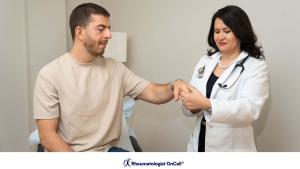
After this interview with the doctor, a thorough physical exam will be conducted to assess if you have:
- Joint swelling, redness, or warmth
- Difficulties with the range of motion in affected joints
- Issues with muscle strength or tenderness
- If you have skin and nail changes (e.g., psoriasis-related arthritis signs) or
- Signs of systemic involvement (such as rashes or eye inflammation)
Common Tests and Examinations
Depending on your symptoms, the rheumatologist will determine the appropriate order of tests to help with the diagnosis. The most common autoimmune tests include:
Blood Tests:
- Rheumatoid Factor (RF) – Often elevated in rheumatoid arthritis.
- Anti-Cyclic Citrullinated Peptide (Anti-CCP) Antibodies – A more specific marker for rheumatoid arthritis.
- Erythrocyte Sedimentation Rate (ESR) and C-reactive protein (CRP) – Indicate inflammation in the body.
- Antinuclear Antibody (ANA) Test – Helps identify autoimmune diseases like lupus or Sjogren’s.
- Uric Acid Levels – Elevated levels indicate a potential gout condition.
Imaging Tests:
- X-rays – Detect joint damage or bone abnormalities.
- Ultrasound or MRI – Provide more detailed images of soft tissues and early joint inflammation.
What Are the Next Steps for Diagnosis?
It may take a few weeks for all the tests to be ready, and you will need to meet with the rheumatologist again. A diagnosis of autoimmune disease requires time and thorough analysis, and sometimes, it can be frustrating as patients can’t get their answers from the first visit. Unfortunately, the diagnosis may unfold over several months or years as symptoms develop over time. However, after all the tests are completed, your rheumatologist should be able to rule out or confirm some diseases, and they could discuss with you a plan that may include medications, lifestyle changes, and physical therapy.
Questions to Ask Your Rheumatologist
As time with the doctor could be limited, having a list of questions ready will help you better understand your condition and treatment plan. Most people think about their questions after they leave the office or have an online consultation with the rheumatologist, and they rely on Google to find answers, which is not ideal.
Here is a list of questions that you can consider asking:
- What type of arthritis or autoimmune condition do I have?
- What are the treatment options available?
- What lifestyle changes can help manage my symptoms?
- How will my condition affect my daily life and long-term health?
- Are there any side effects of the medications prescribed?
- How often should I schedule follow-up visits?
Next Step: Book Your First Consultation
Your first rheumatology appointment is crucial in understanding your condition and receiving the appropriate treatment. By preparing well and asking the right questions, you can ensure a productive visit and take charge of your health. A rheumatologist will work with you to manage your symptoms and improve your quality of life.
At Rheumatologist OnCall, we believe in treating patients, not just diseases. That’s why our first visit starts before you enter the online consultation. We collect and review your medical history and available records ahead of time, allowing us to better understand your condition before your appointment.
This approach ensures that when you meet with your rheumatologist, more time is dedicated to addressing your questions and concerns and discussing your medical care goals.
Our patient-centered approach ensures that you feel heard, supported, and empowered to take control of your health.
Schedule your first visit with Rheumatologist OnCall today and experience personalized, expert care tailored to you.
By: Dr. Diana Girnita, MD, PhD, FACR
Rheumatologist
Last Reviewed: May 7, 2025
References
- https://my.clevelandclinic.org/health/articles/22335-rheumatologist
- Cárdenas-Roldán J, Rojas-Villarraga A, Anaya JM. How do autoimmune diseases cluster in families? A systematic review and meta-analysis. BMC Med. 2013 Mar 18;11:73. doi: 10.1186/1741-7015-11-73. PMID: 23497011; PMCID: PMC3655934. https://pmc.ncbi.nlm.nih.gov/articles/PMC3655934/
- Braschi E, Shojania K, Allan GM. Anti-CCP: a truly helpful rheumatoid arthritis test? Can Fam Physician. 2016 Mar;62(3):234. PMID: 26975916; PMCID: PMC4984588.https://pmc.ncbi.nlm.nih.gov/articles/PMC4984588/
- Hainer BL, Matheson E, Wilkes RT. Diagnosis, treatment, and prevention of gout. Am Fam Physician. 2014 Dec 15;90(12):831-6. PMID: 25591183. https://pubmed.ncbi.nlm.nih.gov/25591183/
- Chan A, Suarez A, Kitchen J, Bradlow A. Teleclinics in rheumatology introduced during the first lockdown phase of the COVID-19 pandemic of 2020. Future Healthc J. 2021 Mar;8(1):e27-e31. doi: 10.7861/fhj.2020-0093. PMID: 33791471; PMCID: PMC8004321. https://pubmed.ncbi.nlm.nih.gov/33791471/