Did you know that in the last few years, prescriptions for GLP-1 medications have jumped by more than 600%, yet only about 12% of Americans have access to them for weight loss or diabetes? If this revolutionary treatment could help you live longer by fighting obesity, diabetes, and arthritis all at once, what’s standing in your way?
As a board-certified rheumatologist, I see the intersection of these conditions every day, so this subject is not just academic—it’s personal and a clinical reality.
Why Does a Rheumatologist Care About GLP-1?
Obesity is more than a number on the scale: your fat cells act like mini “chemical factories,” pumping out molecules such as IL-6, TNF-alpha, and IL-17 that keep your immune system stuck in attack mode.
The result?
For people with rheumatoid arthritis (RA), lupus, psoriatic arthritis, or osteoarthritis, this chronic inflammation means more pain, swelling, stiffness, mobility problems, and tissue damage.
What’s most shocking: unchecked inflammation is the root of many chronic diseases—RA, diabetes, gout, heart disease—and doubles your risk of heart attack, stroke, and even premature death.
What Are GLP-1s? How Do They Work?
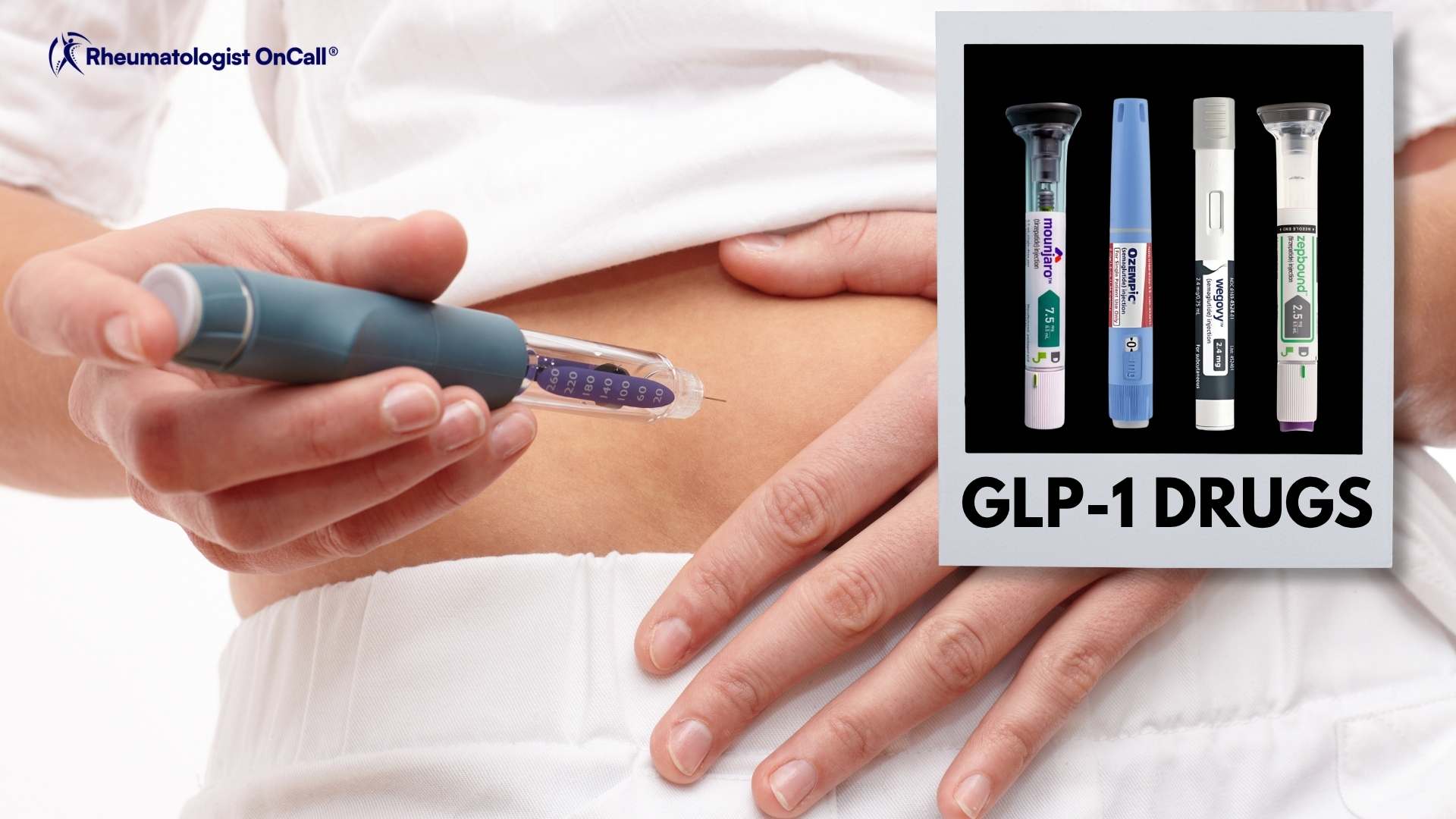
GLP-1 stands for Glucagon-Like Peptide-1. GLP-1 receptor agonists such as semaglutide (Ozempic), tirzepatide (Mounjaro, Zepbound), and liraglutide (Victoza) are advanced medical versions of a hormone your gut produces.
GLP-1s:
Lower blood sugar
Reduce appetite—so you eat less and feel fuller
Promote healthy weight loss
Improve metabolism
Lower whole-body inflammation—including that which affects your joints
GLP-1s Target Both Metabolic and Inflammatory Pathways
Recent research shows that GLP-1 medications can:
Lower levels of inflammatory cytokines like TNF-alpha, IL-6, and IL-1β
Restore a healthier gut microbiome and calm immune reactions
Reduce fat-driven inflammation—why losing just 5–10% of body weight improves autoimmune diseases
Reverse insulin resistance—a key link between metabolic and autoimmune disease
Reduce oxidative stress, protecting organs and joint cartilage
GLP-1s in RA, PsA, OA, and More: Evidence and Results
Rheumatoid Arthritis
Obesity increases RA risk and severity. Studies show GLP-1s help decrease weight, improve metabolic complications, lower flares and stiffness, and may slow joint damage when combined with DMARDs or biologics. They don’t replace these medications, but the required dose may go down.
Psoriatic Arthritis & Psoriasis
Obesity worsens both skin and joint disease. Our patient Daniel (33 years old, 280 lbs, 10 years with psoriasis and PsA) saw dramatic improvements with GLP-1 therapy—weight loss, reduced pain and swelling, healthier skin, and a reduced need for medications after 6 months.
Osteoarthritis
Osteoarthritis (OA) is not “just wear and tear”—inflammation also plays a role. Studies show that GLP-1s decrease pain/stiffness, protect cartilage, and improve mobility, possibly preventing surgery for some.
Gout
Gout patients with diabetes, hypertension, and obesity see increased flares during rapid weight loss (common with GLP-1 or surgery), due to changes in uric acid. Long term, however, weight loss and GLP-1s may reduce flare frequency.
Lupus, Sjögren’s, and Ankylosing Spondylitis and More
GLP-1s may calm immune responses, offset steroid-induced weight gain, protect the kidneys, and lower heart disease risk. Patients often report greater energy and reduced fatigue.
GLP-1s are being studied for heart disease, fatty liver, and kidney protection.
Our Experience
At Rheumatologist OnCall, in the past two years, our patients have experienced:
Remarkable drops in pain, morning stiffness (even with microdoses)
Surge in energy, improved sleep, and confidence
Steady, sustainable weight loss
Reduced need for or the ability to taper steroids, DMARDs, and biologics
For carefully selected patients, GLP-1 therapy has been truly life-changing.
Clinics like ours are helping patients with autoimmune or chronic pain use microdosing and personalized care—even if they don’t fit the “weight loss” criteria.

Real-World Limitations: Insurance Barriers
If the science is clear, why can’t everyone access GLP-1? Over 80% of insurance plans put up barriers—strict approvals, costs, required proof of failed diets, and shortages driven by sky-high demand. In the US, GLP-1 spending rose from $13 to $72 billion in just five years, making approval tough for patients without diabetes—even as data for arthritis risk and cardiovascular benefits grow.
Take the Next Step—The OASIS Advantage
Are you tired of pain, fatigue, and insurance denials?
You’re not alone.
GLP-1 drugs are shifting the paradigm in the care of chronic inflammatory and autoimmune conditions. If you want a future with better control over arthritis, inflammation, and risk, explore a personalized solution like OASIS with our team.
Curious if you’re a candidate?
Schedule a virtual consultation or check out our website for more information.
References
https://www.jci.org/articles/view/194751
https://pubmed.ncbi.nlm.nih.gov/40617296/
https://pubmed.ncbi.nlm.nih.gov/37150489/
https://pubmed.ncbi.nlm.nih.gov/35738455/
https://pubmed.ncbi.nlm.nih.gov/30897288/
https://pubmed.ncbi.nlm.nih.gov/31336333/
https://arthritis-research.biomedcentral.com/articles/10.1186/s13075-017-1431-9
https://acrabstracts.org/abstract/glp-1-receptor-agonists-to-facilitate-weight-loss-and-improve-disease-activity-pain-and-function-in-patients-with-rheumatic-and-musculoskeletal-disease-real-world-evidence-from-the-rheumatology-info/
https://www.rheumatologyadvisor.com/reports/glp-1-ras-linked-to-lower-risk-for-aki-in-t2d-with-ia/
https://acrabstracts.org/abstract/association-of-semaglutide-prescription-with-improved-joint-outcomes-in-rheumatoid-arthritis-patients/
https://acrabstracts.org/abstract/impact-of-sglt2-inhibitors-and-glp-1-agonists-on-ra-flares-in-patients-on-dmard-therapy-a-retrospective-study/
https://acrabstracts.org/abstract/glucagon-like-peptide-1-receptor-agonists-therapy-is-associated-in-improvement-in-psoriatic-arthritis-related-and-metabolic-outcomes-a-retrospective-analysis-of-two-cohorts/
https://www.nature.com/articles/s41598-020-71676-6
https://pmc.ncbi.nlm.nih.gov/articles/PMC9289681/
Author

Frequent asked questions
What are GLP-1 medications and how do they work?
GLP-1 receptor agonists mimic the natural gut hormone GLP-1 to improve insulin release, lower blood sugar, reduce appetite, support weight loss, and decrease inflammation throughout the body.
Which conditions can GLP-1 medications help?
These drugs are FDA-approved for type 2 diabetes and obesity, but growing evidence supports their use for rheumatoid arthritis, psoriatic arthritis, lupus, osteoarthritis, and metabolic/autoimmune diseases.
Who should not take GLP-1 medications?
GLP-1s are not safe for people with a history of pancreatitis, certain thyroid cancers, MEN2 syndrome, severe kidney/liver disease, or during pregnancy/breastfeeding.
How are GLP-1 medications taken?
Most are injected subcutaneously (under the skin) once daily or weekly using a simple pen device. Your doctor will help determine the best routine for you.
What side effects should I expect?
Common side effects include nausea, diarrhea, constipation, and fatigue, which often improve over time. More rarely, serious events like pancreatitis or gallbladder issues can occur and require medical attention.
How quickly will I notice results with GLP-1 therapy?
Decreased appetite and better blood sugar are usually seen within weeks. Weight loss and improvements in joint pain or fatigue develop gradually over months.
Do GLP-1 medications help joint pain and inflammatory arthritis?
Yes, clinical experience and new studies show reduced symptoms, lower flare frequency, and improved mobility for patients with RA, PsA, lupus, and OA.
Can GLP-1 medications be combined with other drugs?
In most cases, yes—GLP-1s can be safely combined with diabetes, arthritis, and autoimmune medications. Always consult your provider for perspersonalizedommendations.
Are the benefits of GLP-1s long-lasting?
As with treatment for hypertension or diabetes, chronic conditions require ongoing therapy. Stopping GLP-1s leads to weight regain and inflammation, unless healthy habits support those changes.
Why do insurance companies often deny coverage for GLP-1 medications?
High demand, strict approval criteria, cost concerns, and frequent shortages mean insurance plans delay or restrict access to GLP-1s—especially for weight loss or non-diabetic indications