Can breast implants cause autoimmune disease? If you’re waking up exhausted after eight hours of sleep, battling joint pain, brain fog, hair loss, sandpaper-dry eyes, and skin rashes nothing seems to touch — and you’ve started to wonder if your breast implants are the reason — you are asking exactly the right question. Mounting scientific evidence, FDA warnings, and what we see every week in our rheumatology practice all point to the same answer: yes, breast implants can trigger autoimmune disease and a wider syndrome known as Breast Implant Illness (BII) in susceptible women.
You go to your doctor. They run a few tests, shrug, and tell you it’s stress. Or hormones. Or “just getting older.”
You bring it up with your plastic surgeon — because somewhere in the back of your mind, you’ve started to wonder about your breast implants. They smile politely and tell you implants are perfectly safe. There’s no connection. You’re imagining things.
But you’re not imagining things.
I’m Dr. Diana Girnita, a double board-certified rheumatologist, and I’ve spent years sitting across from women — virtually and in person — who have been told exactly what you’ve been told. Women who knew, deep in their gut, that something was wrong. Women who were dismissed for years before someone finally listened.
If that’s you, I want you to know two things right now: Your symptoms are real. And you are not alone.
In this article, I’ll walk you through what the science actually says about breast implants and autoimmune disease, what we see every day in our practice at Rheumatologist OnCall, and exactly what to do if you suspect your implants are making you sick.
What You’ll Learn
- How breast implants may trigger autoimmune disease
- The autoimmune conditions most strongly linked to implants
- Whether silicone or saline implants are safer (the answer may surprise you)
- What explantation can and can’t do for your symptoms
- The exact next steps to take if you suspect Breast Implant Illness (BII)
Why So Many Women Are Being Dismissed
Breast implants have been used since 1962 — for breast augmentation, for reconstruction after mastectomy, for restoring confidence after pregnancy or weight loss. For most women, they’re a positive experience.
But for a growing number, they’re not.
In the 1990s, the FDA banned silicone implants over safety concerns. They were reinstated in 1999 when the available evidence was deemed inconclusive. Then in 2019, the FDA logged nearly 2,500 reports of Breast Implant Illness in a single year. By 2021, the FDA mandated a boxed warning — the strongest warning a medical device can carry — requiring surgeons to disclose that breast implants may be associated with systemic symptoms and autoimmune disease.
And yet, in 2026, women are still being told it’s all in their heads.
Here’s the truth: roughly 300,000 breast implant surgeries happen in the U.S. every year. Most plastic surgeons are skilled, caring professionals — but they’re trained in surgery, not immunology. When a patient comes back two, five, or ten years later with fatigue and joint pain, they often have no framework for connecting those symptoms back to the implants. So they don’t.
That’s not malice. It’s a gap in the system. And women are falling through it.
Symptoms of Breast Implant Illness (BII)
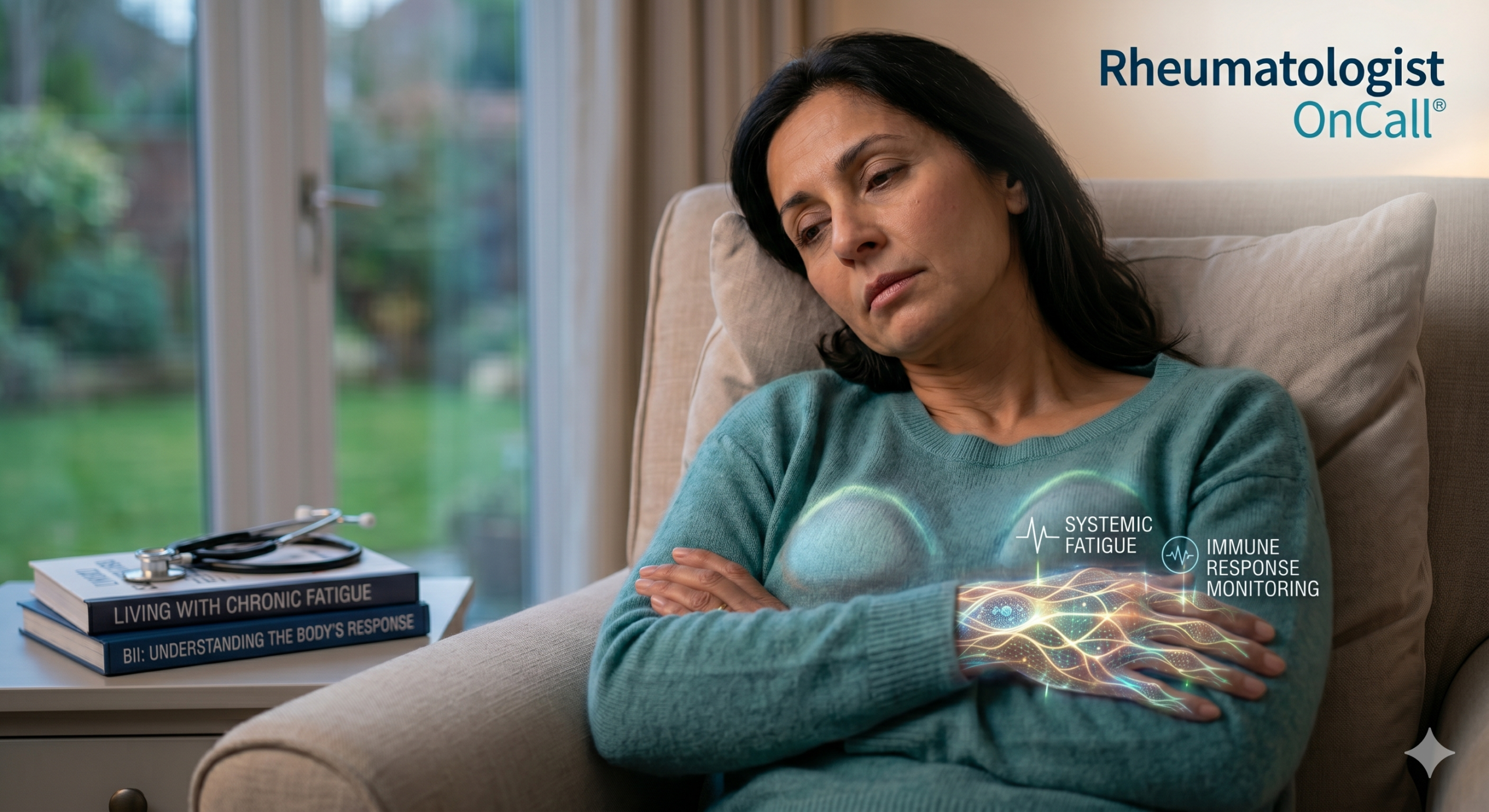
Breast Implant Illness isn’t a single disease — it’s a constellation of symptoms that can appear weeks, months, or even years after surgery. In our practice, the most common symptoms we hear about are:
- Crushing fatigue that sleep doesn’t fix
- Joint pain in the knees, hips, hands, or back
- Muscle aches and weakness
- Brain fog, memory lapses, trouble concentrating
- Skin rashes, eczema-like flares, or unexplained itching
- Dry eyes and dry mouth (sandpaper sensation)
- Blurry vision or light sensitivity
- Hair loss or thinning
- Numbness or tingling in hands and feet
- Difficulty swallowing or a feeling of throat tightness
- Recurrent low-grade fevers
- Anxiety, depression, or mood changes that feel chemical, not situational
If you’re reading this list and nodding along, please understand: this pattern is recognized in the medical literature. A 2022 review in Expert Review of Clinical Immunology (Cohen Tervaert et al.) confirmed that breast implants can trigger systemic inflammation, and BII is increasingly accepted as a real clinical entity.
You’re not crazy. You’re not weak. Your body is telling you something.
Autoimmune Diseases Linked to Breast Implants
This is where it gets serious. Beyond BII symptoms, research has tied implants to a higher risk of developing actual autoimmune diseases.
A landmark 2018 study of more than 24,000 women with silicone implants found significantly higher rates of:
- Sjögren’s Syndrome — dry eyes, dry mouth, joint pain, fatigue; can affect lungs and nerves
- Systemic Sclerosis (Scleroderma) — skin tightening, Raynaud’s phenomenon, swallowing problems
- Sarcoidosis — inflammation in the lungs and lymph nodes
A separate 2019 study of nearly 100,000 implant recipients added more conditions to the list:
- Rheumatoid arthritis
- Lupus (SLE)
- Fibromyalgia
- Chronic fatigue syndrome
- Raynaud’s phenomenon
- Mixed connective tissue disease
These aren’t fringe theories. These are peer-reviewed findings in major journals. And in our clinic, we see these diagnoses in implant patients regularly.
Silicone vs. Saline: Is One Safer?
I get this question almost every week. The honest answer? Both carry risk.
A 2020 review found similar rates of immune activation in silicone and saline implants — and even in unrelated devices like orthopedic implants. Two main mechanisms are at play:
1. Bacterial biofilm. Bacteria can colonize the implant surface and form a sticky, persistent layer that quietly irritates the immune system — like a splinter your body can never quite expel.
2. Silicone exposure. Even saline implants have a silicone shell. Microscopic silicone particles can leak (a process called “gel bleed” in silicone implants, or shell shedding in saline) and trigger immune responses.
If you have a personal or family history of autoimmune disease — lupus, Hashimoto’s, rheumatoid arthritis, Sjögren’s, even psoriasis — your risk is higher regardless of which implant type you have.
Does Removing the Implants Help?
Explantation — surgical removal of the implants along with the surrounding scar tissue capsule (a procedure called en bloc capsulectomy) — can be life-changing for many women.
The data:
- A 2016 study found 75% of BII patients reported significant symptom improvement after explantation.
- For women with a diagnosed autoimmune disease, explantation alone improved symptoms in about 16%.
- Explantation combined with immune-modulating treatment (such as hydroxychloroquine or methotrexate) improved symptoms in 56%.
The pattern we see in our practice mirrors this: explantation often gives the immune system a chance to calm down, but if autoimmunity has already taken hold, you usually need both — remove the trigger and treat the immune system.
Explantation is a personal decision, especially for women who had reconstruction after breast cancer. It should always be made together with a plastic surgeon and a rheumatologist who understands BII. Body image, oncologic history, and your symptom severity all matter.
What We See Every Day at Rheumatologist OnCall
I want to be candid with you about what walks through our virtual door.
We see women in their 30s with symptoms that have been brushed off for a decade. We see women who’ve been to five specialists and left every appointment feeling more dismissed than the last. We see women who finally got an ANA test only to be told “it’s mildly positive but probably nothing” — when in fact it was the first real clue.
We also see the other side: women who, after a thorough workup, have a clear autoimmune diagnosis and a treatment plan that actually works. Women who get their lives back.
What makes the difference isn’t magic. It’s time, listening, and the right testing. A standard 15-minute appointment cannot evaluate BII. It takes a detailed history of your implant timeline, your symptom progression, and a targeted lab panel — ANA, anti-dsDNA, anti-Ro/La, complement levels, RF, anti-CCP, CRP, ESR, thyroid antibodies, and sometimes more.
That’s the level of evaluation you deserve. Not a shrug.
Lifestyle Steps That Genuinely Help
Whether you choose explantation or not, these changes can lower the inflammatory burden on your body. They are not a cure — but they help.
- Anti-inflammatory eating. A Mediterranean-style pattern: fatty fish (salmon, sardines), olive oil, leafy greens, berries, nuts, legumes. Cut ultra-processed foods, added sugar, and seed-oil-heavy fried foods.
- Gentle, consistent movement. 30 minutes of walking, swimming, or yoga most days. Avoid pushing into pain — for autoimmune patients, recovery matters more than intensity.
- Sleep as medicine. Aim for 7–9 hours. Inflammation worsens without it.
- Stress regulation. Meditation, breathwork, therapy. Chronic stress dysregulates the immune system.
- Reduce environmental triggers. Glass and stainless steel instead of plastic, especially for hot foods. Filter your water. Read your skincare labels.
Your Next Steps — A Clear Plan
If you suspect your implants are making you sick, here is exactly what I want you to do:
- Start a symptom journal. Note what you feel, when it started, and how it tracks with your implant timeline. Bring this to every appointment.
- Request the right labs. At minimum: ANA with reflex titer and pattern, RF, anti-CCP, ESR, CRP, complete metabolic panel, thyroid panel with antibodies, vitamin D, and complete blood count.
- See a rheumatologist who understands BII. Not all do. Ask directly: “Do you evaluate Breast Implant Illness?”
- Get a second opinion if you’re dismissed. Once is bad luck. Twice is a pattern. You are allowed to keep looking until someone listens.
- Don’t make explantation decisions alone. This needs both a rheumatologist and a plastic surgeon experienced in en bloc capsulectomy.
How Rheumatologist OnCall Can Help
We built Rheumatologist OnCall specifically for the women who’ve been failed by the standard 15-minute appointment.
Here’s what working with us looks like:
- Virtual visits across multiple states — no waiting six months for an in-person referral
- Comprehensive autoimmune workups with the labs that actually matter
- Personalized treatment plans that combine medical care, lifestyle, and (when appropriate) coordination with your plastic surgeon for explantation
- Direct access to a double board-certified rheumatologist — me — not a rotating cast of providers
- Ongoing follow-up so your plan evolves as your body does
You don’t have to keep fighting alone for someone to take you seriously.
Ready to Be Heard?
If your symptoms have been dismissed, if you suspect your implants are part of the picture, or if you simply want a rheumatologist who will actually listen — we’re here.
Schedule a virtual consultation with Rheumatologist OnCall →
You deserve answers. Not another shrug.
References
- U.S. Food and Drug Administration. Breast Implant Illness (BII). https://www.fda.gov/medical-devices/breast-implants/breast-implant-illness-bii
- U.S. Food and Drug Administration. FDA Strengthens Safety Requirements and Updates Study Results for Breast Implants. https://www.fda.gov/news-events/press-announcements/fda-strengthens-safety-requirements-and-updates-study-results-breast-implants
- Cohen Tervaert JW, Mohazab N, Redmond D, van Eeden C, Osman M. Breast implant illness: scientific evidence of its existence. Expert Rev Clin Immunol. 2022 Jan;18(1):15-29. doi: 10.1080/1744666X.2022.2010546. PMID: 34882509.
- Watad A, Rosenberg V, Tiosano S, et al. Silicone breast implants and the risk of autoimmune/rheumatic disorders: a real-world analysis. Int J Epidemiol. 2018.
- Coroneos CJ, Selber JC, Offodile AC, et al. US FDA Breast Implant Postapproval Studies: Long-term Outcomes in 99,993 Patients. Annals of Surgery. 2019.
Medical disclaimer: This article is for educational purposes and does not constitute medical advice.
Diana Girnita, MD, PhD, FACR, is a double board-certified rheumatologist and the founder of Rheumatologist OnCall, a virtual rheumatology practice serving women across multiple states. She holds a PhD in immunology and has dedicated her career to helping patients dismissed by the conventional system finally get answers.
Author
 View all posts
Dr. Girnita is a physician-scientist double-board certified in rheumatology and internal medicine, trained at Harvard, with a PhD in immunology. She conducted award-winning immunology research and received the "Top Doc in Cincinnati" award before launching her direct-care/direct-pay Rheumatologist OnCall practice.