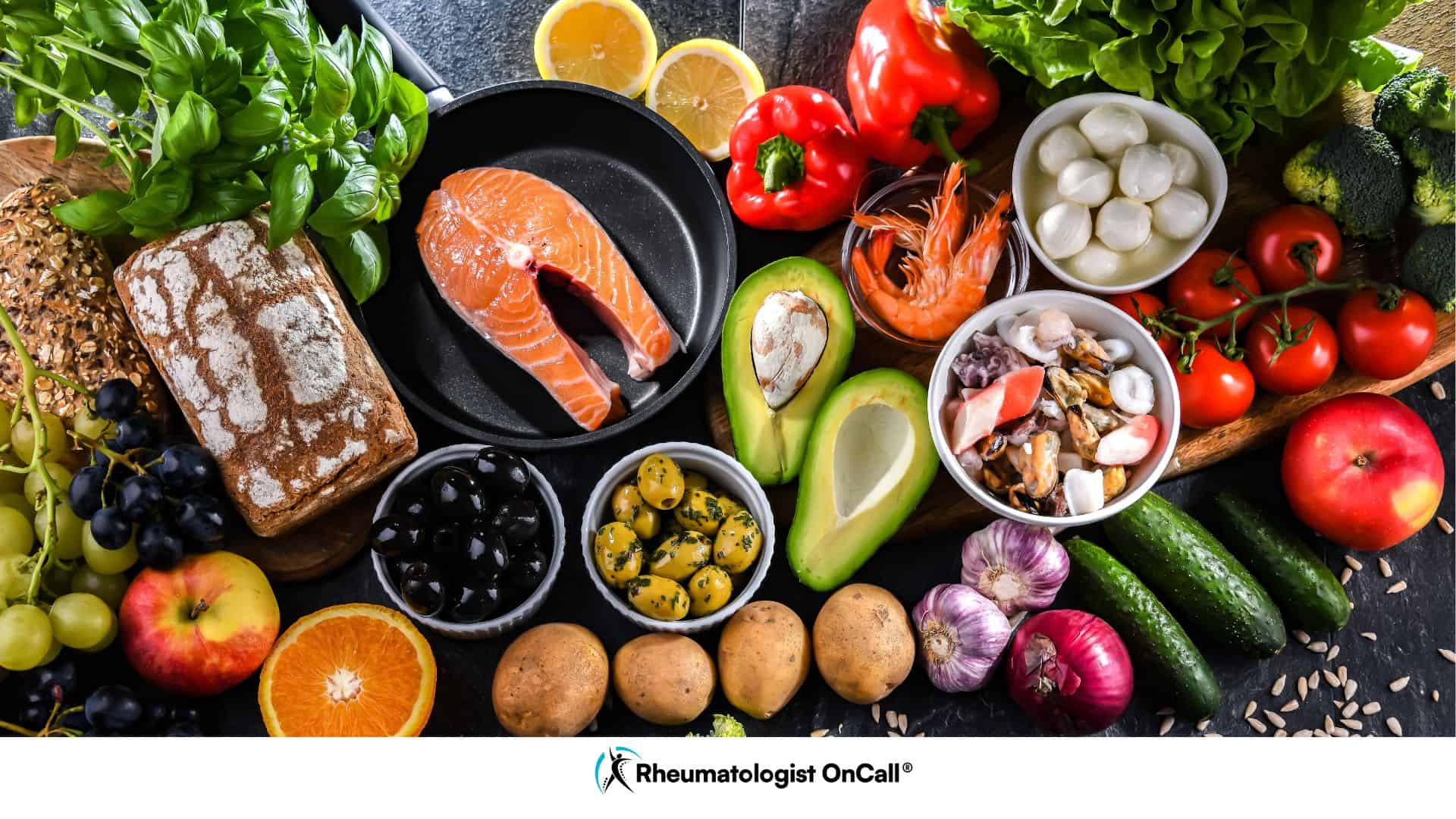
What are the worst foods for osteoarthritis? If your knees ache every time you stand up, your fingers feel stiff in the morning, and your hips remind you of every step you take, the answer may already be sitting in your pantry. After more than 15 years as a rheumatologist treating osteoarthritis, I can tell you with certainty: certain everyday foods drive joint inflammation, accelerate cartilage damage, and quietly worsen osteoarthritis pain. And one of the worst offenders is in nearly every American kitchen.
You’ve probably been told that osteoarthritis is just “wear and tear.” That nothing can really be done except painkillers and waiting for a joint replacement. That diet doesn’t matter much.
I’m here to tell you something different.
I’m Dr. Diana Girnita, a double board-certified rheumatologist and the founder of Rheumatologist OnCall. Every week, I sit with patients — virtually, from across the country — who have been suffering for years and were never once asked about what they eat. And every week, I watch those same patients feel real, measurable relief within two to four weeks of changing a few foods.
Your pain isn’t only in your joints. A surprising amount of it is on your plate.
In this article, I’ll walk you through the foods that are quietly fueling your osteoarthritis, the #1 worst offender (you’ll be surprised), and the simple swaps that can change how you feel — sometimes in as little as 14 days.
What You’ll Learn
- The inflammatory foods making osteoarthritis pain worse
- The #1 food driving joint inflammation in 90% of American kitchens
- Easy, satisfying swaps that reduce stiffness and improve mobility
- What we recommend to osteoarthritis patients at Rheumatologist OnCall
Why Diet Matters More Than You’ve Been Told
Osteoarthritis (OA) affects more than 32 million Americans — the most common form of arthritis in the world. It happens when the cartilage cushioning your joints (knees, hips, hands, spine) gradually breaks down, eventually leading to bone-on-bone contact. The result: pain, stiffness, swelling, reduced range of motion, and a slow erosion of the simple things you used to take for granted — climbing stairs, opening a jar, going for a walk.
While OA is more common after age 50, it can appear earlier in people with prior joint injuries, excess weight, a family history, or hormonal changes after menopause. Women are at higher risk than men.
Here’s what most people aren’t told: diet plays a critical role in how fast OA progresses and how much it hurts. A 2022 study in Nutrients confirmed that dietary choices directly influence both pain levels and the rate of cartilage breakdown. Some foods accelerate the damage. Others actively protect your joints.
The good news? You have more control than you’ve been led to believe.
Inflammatory Foods Quietly Making Your Osteoarthritis Worse
In our practice, when we ask new patients to log their meals for a week, the same patterns show up over and over. Below are the foods we see causing the most damage — and exactly what to swap them for.
1. Processed Meats
Bacon, sausage, deli meat, hot dogs, pepperoni — they’re convenient, they’re familiar, and they’re some of the most inflammatory foods you can eat with osteoarthritis.
A 2024 study found that ultra-processed meats significantly increase the risk of knee OA, largely because of their nitrates, high sodium, and inflammatory fats. These ingredients drive oxidative stress, which speeds up cartilage breakdown — the exact process you’re trying to slow down.
Swap it: Lean grass-fed meats, wild-caught salmon, sardines, or plant-based proteins like lentils and chickpeas. Oily fish three times a week delivers omega-3 fatty acids that actively reduce joint inflammation — turning your plate into part of the treatment.
2. Fried Foods and Industrial Seed Oils
Do you notice your joints feeling stiffer the day after a fast-food meal or fried takeout? That’s not a coincidence.
Fried foods — French fries, fried chicken, doughnuts, anything cooked in industrial seed oils like soybean, corn, or canola — produce compounds called advanced glycation end products (AGEs). AGEs damage collagen, which is the protein your cartilage depends on. Research published in Arthritis Research & Therapy links high AGE consumption to worse OA symptoms and faster joint deterioration.
Swap it: Cook with extra-virgin olive oil, avocado oil, or grass-fed butter. Build meals around healthy fats — avocado, olives, nuts, seeds — paired with quality protein. A grilled-salmon salad with olive oil and lemon is genuinely one of the best meals you can eat for your joints.
3. Processed Dairy
Dairy gets complicated, so let me be precise.
The problem isn’t dairy itself — it’s processed dairy. American cheese slices, pre-shredded cheese with anti-caking agents, flavored yogurts loaded with sugar, and “cheese product” all contain additives and emulsifiers that increase inflammatory markers in OA patients, according to a 2023 study in Nutrients.
Swap it: Choose natural, minimally processed dairy — feta, fresh goat cheese, full-fat plain Greek yogurt, or fermented options like kefir. Kefir in particular delivers probiotics that support gut health, which directly influences systemic inflammation.
4. Alcohol and Excessive Red Meat
I include this one because it’s underestimated. Daily alcohol and high red-meat intake both increase uric acid and inflammatory markers, and in OA patients, this often translates to flares of pain in the knees, big toes, and hands. You don’t have to give up either entirely — but if you’re suffering, this is one of the first areas to scale back.
Swap it: Limit alcohol to a few servings per week, prioritize fish and poultry over red meat, and add anti-inflammatory herbs like turmeric, ginger, and garlic to your cooking.
The #1 Worst Food for Osteoarthritis (It’s in 90% of Kitchens)
Now for the food I warn every patient about first.
Refined carbohydrates and added sugars.
White bread, white pasta, white rice, sugary cereals, pastries, soda, sweetened coffee drinks, “healthy” granola bars, flavored yogurts — these are everywhere. And they’re devastating for osteoarthritic joints.
Here’s why: refined carbs and sugar spike your blood glucose, which triggers a cascade of inflammatory chemicals (cytokines) that travel through your bloodstream and attack already-damaged joint tissue. A study in The American Journal of Clinical Nutrition found that high refined-carb intake can nearly triple inflammatory markers in the body.
There’s a second problem: these foods drive weight gain. Every extra pound you carry puts roughly four pounds of extra pressure on your knees with every step. Refined carbs literally make your joints work harder while making them hurt more.
Swap it:
- White bread → whole-grain sourdough or sprouted-grain bread
- White pasta → whole-grain pasta, lentil pasta, or zucchini noodles
- White rice → quinoa, wild rice, or cauliflower rice
- Sugary cereal → Greek yogurt with berries, walnuts, and a drizzle of honey
- Soda → sparkling water with lemon or muddled berries
Read the label on every packaged food in your kitchen this week. You will be shocked at how much sugar is hidden in things you’d never suspect — pasta sauce, salad dressing, “natural” granola, even bread.
The Mediterranean Diet: The Most Proven Anti-Inflammatory Approach
If you remember nothing else from this article, remember this: the Mediterranean diet is the most evidence-backed eating pattern for osteoarthritis. A 2024 review in Aging Clinical and Experimental Research confirmed it reduces OA pain and may slow disease progression — and a systematic review in Nutrition & Dietetics showed similar benefits across multiple studies.
What it actually looks like:
- Whole, colorful plants: berries, cherries, leafy greens, broccoli, bell peppers, sweet potatoes
- Healthy fats: extra-virgin olive oil, avocados, nuts, seeds
- Omega-3-rich fish: salmon, mackerel, sardines, herring — 3 times per week
- Legumes: lentils, chickpeas, black beans, white beans
- Whole grains: quinoa, farro, oats, brown rice
- Anti-inflammatory herbs and spices: turmeric, ginger, garlic, oregano, rosemary, basil
- Limited: red meat, processed foods, added sugar
A simple day on the Mediterranean diet might look like:
- Breakfast: Plain Greek yogurt with berries, walnuts, and a drizzle of honey
- Lunch: Grilled salmon over a big salad with olive oil, lemon, and quinoa
- Dinner: Whole-grain pasta with sautéed vegetables, olive oil, and white beans
- Snack: A handful of almonds and an apple
This isn’t a restrictive diet. It’s a way of eating you can actually sustain.
What We See Every Day at Rheumatologist OnCall
We see patients who’ve been told for years that “nothing can be done” for their osteoarthritis except more pain medication. We see people in their 40s and 50s being scheduled for joint replacements without anyone ever asking about their diet, their weight, their inflammation markers, or their lifestyle. We see patients on three or four medications who have never been given a single nutrition recommendation.
That’s not the standard of care you deserve.
In our practice, every osteoarthritis patient gets:
- A detailed evaluation of inflammation drivers — including diet, sleep, weight, gut health, and stress
- Lab work that goes beyond the basics (hs-CRP, ESR, vitamin D, metabolic panel, and more when indicated)
- A personalized nutrition plan rooted in Mediterranean principles, adapted to your life and food preferences
- Evidence-based supplement guidance (turmeric, omega-3, glucosamine, collagen — what works, what doesn’t)
- Coordinated medical treatment when needed, not as the only option
The patients who commit to changing what they eat almost always feel a difference within two to four weeks. Less stiffness in the morning. Less pain on stairs. More energy. Better sleep.
That’s not magic. That’s inflammation finally going down.
Practical Tips to Start This Week
You don’t have to overhaul your life overnight. Start here:
- Read labels. If sugar appears in the first three ingredients, put it back.
- Cook one more meal at home this week than you did last week. That’s it.
- Replace one refined-carb meal a day with a whole-food version (oatmeal instead of cereal, quinoa instead of rice).
- Drink 8–10 glasses of water daily. Cartilage is 70% water — it needs hydration.
- Add fatty fish three times a week, or take a high-quality omega-3 supplement.
- Cut back on alcohol and processed meats. Not forever — just enough to see how your joints respond.
- Track how you feel. A simple 1–10 pain score in a notes app, daily for two weeks, will show you what’s working.
Ready for a Plan That Actually Works?
If you’re tired of being told to “just take more ibuprofen” — if you want a rheumatologist who will look at your whole picture and build you a real plan — we’re here.
Schedule a virtual consultation with Rheumatologist OnCall →
Your joints can feel better. You just need the right plan, and someone who actually listens.
References
- Malik VS, Popkin BM, Bray GA, Després JP, Hu FB. Sugar-sweetened beverages, obesity, type 2 diabetes mellitus, and cardiovascular disease risk. Circulation. 2010 Mar 23;121(11):1356-64. PMC2862465
- Zeng J, Franklin DK, Das A, Hirani V. The effects of dietary patterns and food groups on symptomatic osteoarthritis: A systematic review. Nutr Diet. 2023 Feb;80(1):21-43. PMC10092134
- Veronese N, Ragusa FS, Dominguez LJ, Cusumano C, Barbagallo M. Mediterranean diet and osteoarthritis: an update. Aging Clin Exp Res. 2024 Dec 3;36(1):231. PMID 39625615
- Morales-Ivorra I, Romera-Baures M, Roman-Viñas B, Serra-Majem L. Osteoarthritis and the Mediterranean Diet: A Systematic Review. Nutrients. 2018 Aug 7;10(8):1030. PMC6115848
Diana Girnita, MD, PhD, FACR is a double board-certified rheumatologist and the founder of Rheumatologist OnCall, a virtual rheumatology practice serving patients across multiple states. She holds a PhD in immunology and has spent over 15 years helping patients with osteoarthritis and autoimmune diseases get answers and real relief.
Author

Frequent asked questions
Can changing my diet really reduce osteoarthritis pain?
Yes. Most patients who follow a Mediterranean-style anti-inflammatory diet notice less stiffness and pain within 2–4 weeks. Diet won’t regrow cartilage, but it dramatically reduces the inflammation that drives pain and accelerates joint damage.
What is the absolute worst food for osteoarthritis?
Refined carbohydrates and added sugar. They spike blood glucose, trigger inflammation, contribute to weight gain (which stresses joints), and are hidden in dozens of everyday foods — bread, pasta, cereal, sauces, “healthy” snacks, and drinks.
Should I avoid dairy completely if I have osteoarthritis?
Not necessarily. Highly processed dairy (American cheese, flavored yogurts, cheese products) is inflammatory. Natural, minimally processed dairy — Greek yogurt, kefir, feta, goat cheese — can actually be beneficial for many patients.
Are nightshades (tomatoes, peppers, eggplant) bad for osteoarthritis?
For most people, no. Despite popular belief, there’s very little scientific evidence that nightshades worsen OA. If you personally notice flares after eating them, try a 4-week elimination — but don’t cut them out preemptively.
How long until I notice results from changing my diet?
Most patients feel improvement in stiffness and pain within 2 to 4 weeks of consistent change. Cartilage protection and longer-term benefits build over months.
Do I need supplements for osteoarthritis?
Sometimes. Omega-3 fish oil, vitamin D, turmeric (curcumin), and collagen have the best evidence for OA. But supplements work best on top of a good diet — never as a substitute. We help patients choose evidence-based products at Rheumatologist OnCall.
Will losing weight help my osteoarthritis?
Significantly. Every pound of body weight translates to roughly 4 pounds of pressure on your knees. Even a 10-pound weight loss can dramatically reduce knee pain. The Mediterranean diet supports gradual, sustainable weight loss without restrictive dieting.
Is coffee bad for osteoarthritis?
For most people, moderate coffee (1–3 cups daily, without loads of sugar) is fine and may even have anti-inflammatory benefits. The problem is what people add — sugar, flavored syrups, sweet creamers.
Can I drink alcohol with osteoarthritis?
Occasionally, yes. Daily alcohol increases inflammation and uric acid, which often worsens joint pain. If you drink, limit to a few servings per week and choose red wine over hard liquor or beer.
How do I work with Rheumatologist OnCall?
Visit rheumatologistoncall.com to book a virtual consultation. We see patients across multiple states, offer evening appointments, and build personalized osteoarthritis plans that combine nutrition, lifestyle, and medical care.